.png)
Designing With Purpose

Project Images
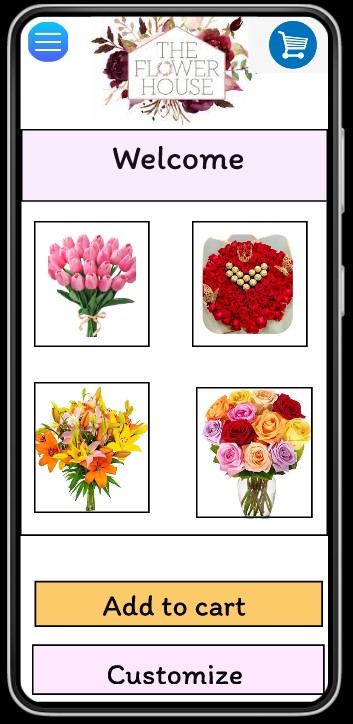

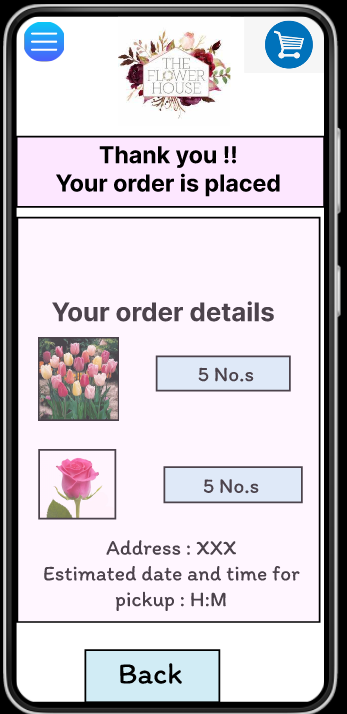
Testing and data gathering for improvement.


Explored & Selected the most intuitive solution through sketching and wireframing.
Defined the problem. Established user needs and key learning & design goals.

Design Thinking Process

Contextual research and Identifying learne's motivations and challeges.

Review of gathered data and refinement for improvement.

The Problem
Busy individuals and business owners struggle to find floral arrangements that match their unique themes and aesthetic preferences. Most online flower-ordering platforms offer limited customization, making it difficult to create designs that align with personal events or brand identities.

The Solution
I Designed a user-centered flower customization app featuring guided personalization, curated templates, and real-time previews. The experience simplifies decision-making, reduces cognitive load, and helps users create floral arrangements that match their event or brand aesthetic.

The Outcome
The final design provides a seamless and personalized flower-ordering experience. Guided customization, curated templates, and real-time previews help users make faster decisions and create floral arrangements that align with their event themes or brand aesthetic.
Empathy-User Research
To understand user needs, I conducted secondary research, including online reviews of flower vendors and competitor analysis of flower delivery platforms. Additionally, I made assumptions based on common user behaviors to identify potential pain points and motivations in ordering customized, theme-based flower arrangements.
Key Insights from research
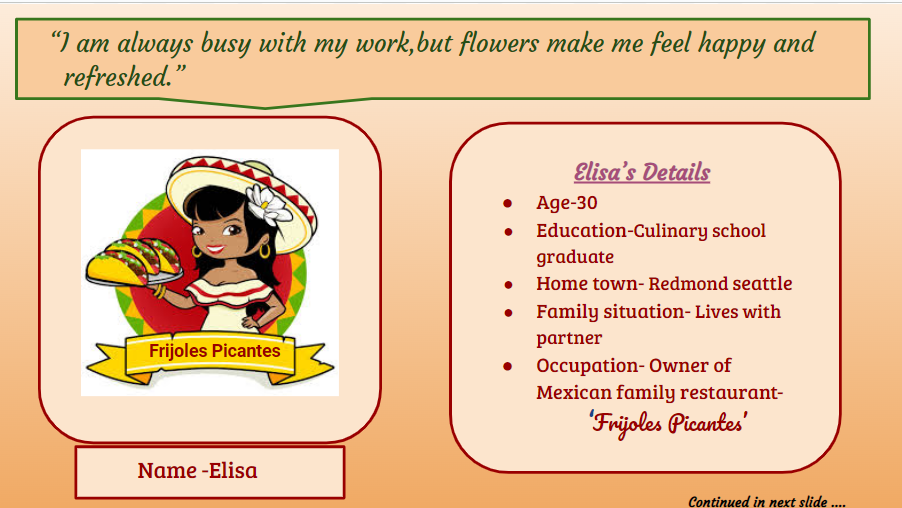
These insights guided the design focus on simplicity, guided customization, clear visual previews, and building user trust. I developed Empathy Map and Persona as follows.
-
Time constraints
-
Too many vendor options
-
Lack of theme-based filtering


-
Limited customization visibility
-
Concerns around payment security
Empathy Map

Persona

Define
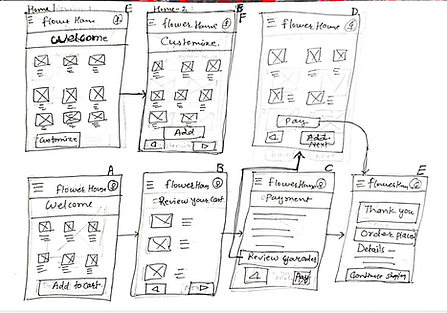
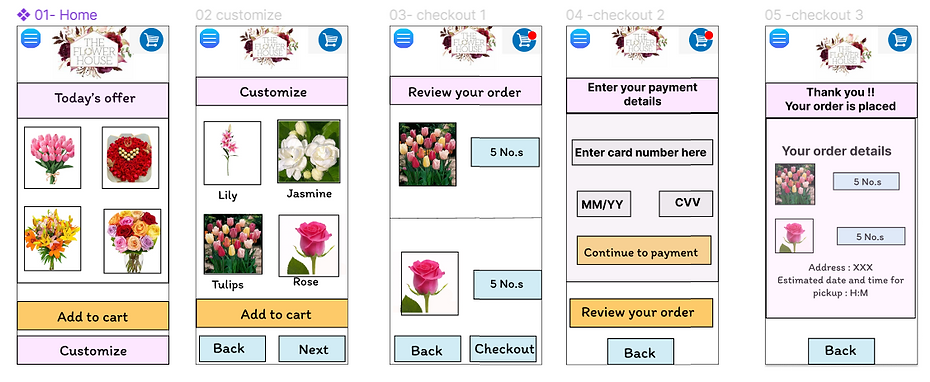
Using low-fidelity wireframes, I explored the core user journey and screen layouts for the flower customization app. This process helped refine navigation, organize content, and ensure a simple, intuitive ordering experience before moving to high-fidelity designs.
Action Mapping

Ideate
I created storyboards to visualize how users interact with the app in real-world scenarios. This helped identify opportunities, explore potential solutions, and map the end-to-end user journey before moving into high-fidelity wireframes and prototypes.
Story Board

Prototype
Low-Fidelity Prototype


High-Fidelity Prototype
Test
The design was planned to evaluated based on assumed user behavior and usability principles to assess the effectiveness of the customization flow. The solution focuses on reducing decision fatigue through guided steps and visual previews, while maintaining a clear and intuitive navigation structure. Overall, the final design aims to provide a more efficient and personalized experience for users creating theme-based flower arrangements.