.png)
Designing With Purpose
My Design Process
From Analysis to Impact
Overview
My design process is guided by a blend of design frameworks, learning theories, human-centered principles, accessibility standards, and e-learning best practices. Together, these provide a structured foundation for understanding users, defining problems, and creating meaningful, inclusive, and evidence-based learning experiences.
Frameworks That Shape My Design


Learning Theories & Principles

I use Bloom's Taxonomy during the analysis phase to create clear, measurable learning objectives that build cognitive complexity, promote higher-order thinking, and improve learner engagement and retention.
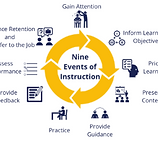
I use Gagné's 9 Events of Instruction during course development to structure the flow of instruction. It provides a learner-centered framework that captures attention, guides learning, reinforces practice, and improves knowledge retention and transfer to real-world situations.

I use Fink's Taxonomy during the learning design phase to create holistic learning experiences that go beyond knowledge acquisition. It helps design learning that integrates application, collaboration, self-reflection, and real-world relevance, resulting in meaningful, engaging, and lasting learning experiences.

I use Backward Design during the analysis and design phases to establish measurable learning outcomes first, then align assessments and instructional strategies to those outcomes. This ensures constructive alignment, purposeful learning experiences, and effective achievement of learning goals.

I apply learning theories such as Behaviorism, Cognitivism, Constructivism, and Connectivism during the analysis and design phases to guide instructional decisions based on learner needs, content, and performance goals. This ensures learner-centered, evidence-based learning experiences that promote engagement, competency development, and meaningful knowledge transfer.

I apply Pedagogy or Andragogy based on the learner profile during the analysis and design phases. This helps me select age-appropriate instructional strategies, align learning experiences with learners' needs and motivations, and create engaging, learner-centered instruction that improves participation and learning outcomes.
Pedagogy Design Sample
Designed and developed a Canvas course for 6th grade learners, applying pedagogical principles to create guided, structured and engaging learning experience.

Andragogy Design Sample
Designed and developed a course for school teachers as adult learners, leveraging Andragogical principles to support self-directed, scenario based and practical learning.

Best Practices That Guide My Work
🛡️ Safe, Legal & Ethical Practices
I integrate safe, legal, and ethical practices throughout instructional design to ensure compliance with copyright, privacy, and institutional policies. This creates secure, inclusive, and responsible learning experiences that protect learner data, promote academic integrity, and foster ethical use of digital resources.
🌐 Digital Citizenship
I incorporate digital citizenship principles into learning experiences to encourage responsible technology use, respectful online communication, and ethical digital participation. This prepares learners to engage safely, collaborate effectively, and make informed decisions in digital environments.
⚖️ Assessment Fairness
I design fair and equitable assessments, during the assessment planning phase by aligning evaluation methods with learning objectives and applying consistent, transparent criteria. This ensures valid measurement of learner performance and supports equitable learning outcomes.
♿ Accessibility (WCAG)
I apply WCAG accessibility guidelines during course design and development to create inclusive learning experiences for diverse learners. This improves usability, removes barriers to learning, and ensures equitable access to content across devices and assistive technologies.
📋 ADA Section 504
I incorporate ADA Section 504 principles during course development by providing accessible content, alternative formats, and appropriate accommodations. This ensures compliance, promotes equal access, and enables all learners to participate fully in the learning experience.
🤝 Minimizing Bias
I minimize bias in instructional design by using inclusive language, diverse representation, and equitable learning activities and assessments. This fosters a respectful learning environment where all learners feel represented, engaged, and supported.
💡 ISTE Standards for Students
I align learning experiences with the ISTE Standards for Students to develop digital literacy, collaboration, creativity, and problem-solving skills. This prepares learners to use technology effectively and succeed in digital learning environments.
👩🏫 ISTE Standards for Teachers
I use the ISTE Standards for Educators to guide the integration of technology into instructional design and teaching practices. This promotes innovative, learner-centered instruction and enhances engagement through purposeful technology integration.
🏅 NSQOL (National Standards for Quality Online Learning)
I use NSQOL standards during course design and quality review to align instruction with recognized quality benchmarks. This ensures well-structured, learner-centered courses that support engagement, consistency, and continuous improvement.
📚 OSCQR (Open SUNY Course Quality Review)
I apply OSCQR standards during course development and review to evaluate course organization, accessibility, assessment, and learner support. This improves course quality, usability, and the overall online learning experience.